The Most Majestic Mountain Goat: An In-Depth Look
The mountain goat (Oreamnos americanus) is a striking cloven-footed mammal native to the rugged, high-altitude regions of western North America. This article revisits what makes these alpine creatures remarkable—from their anatomy and evolution to their habitat, movement, and diet—offering a concise, reader-friendly overview for naturalists and curious minds alike.
Published May 5, 2026
Updated May 5, 2026
By Megan Walker
Introduction
The mountain goat (Oreamnos americanus) is a striking cloven-footed mammal native to the rugged, high-altitude regions of western North America. This article revisits what makes these alpine creatures remarkable—from their anatomy and evolution to their habitat, movement, and diet—offering a concise, reader-friendly overview for naturalists and curious minds alike.
Classification and Evolution
Mountain goats belong to the genus Oreamnos and are the sole living species in this group. They are part of the subfamily Caprinae within the Bovidae family, placing them among the broader “goat-antelope” lineages that include chamois, takins, and related species. Evolutionary history suggests the mountain goat diverged from its caprine relatives several million years ago, with ancestors likely crossing into North America from Asia via the Bering Strait. This lineage places them close to other mountain-adapted bovids, even as they remain distinct from true goats in the genus Capra.
Physical Characteristics and Adaptations
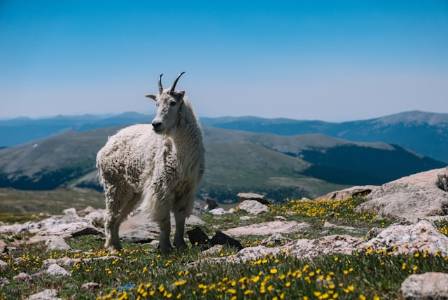
Both males and females boast beards, short tails, and long horns that range from 15 to 28 cm. Their double coats consist of a dense undercoat and a hollow outer layer, enabling survival in extreme cold—temperatures plummet to roughly −46 °C (−51 °F) with winds up to 160 km/h (99 mph). Adults can reach impressive sizes: males are typically larger, with a head-and-body length of 120–179 cm and a shoulder height around 1 meter. Their specialized hooves have sharp dewclaws and an intricate arrangement of pads and hooks that provide traction on slopes steeper than 60°, essential for navigating their cliff-faced habitats.
Habitat, Range, and Range Shifts
Mountain goats are primarily alpine and subalpine specialists inhabiting the Rocky Mountains, Cascade Range, and other Western Cordillera regions from the United States into Canada. They favor high elevations, with many individuals staying above the tree line year-round though seasonal migrations can occur in response to food and weather. While British Columbia hosts a large portion of the global population, introduced populations appear in several western states, reflecting their adaptability to rugged terrain and specific ecological niches.
Movement, Foraging, and Behavior
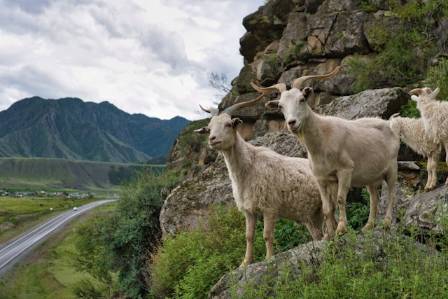
Daily movement tends to be conservative, often restricted to the same mountain face or drainage basin as the individual goat seeks for foraging, thermoregulation, and security. Seasonal movements are driven by nutritional needs and reproductive cycles, with elevations shifting to balance food availability and thermal cover. In winter, goats may travel to mineral licks, sometimes crossing forested valleys, to sustain their mineral intake and energy needs.
Diet and Foraging Habits
Mountain goats are herbivores whose forage includes grasses, herbs, sedges, ferns, mosses, lichens, and twigs from high-altitude shrubs and conifers. In captivity, they can be fed a more varied diet that includes grains, alfalfa, fruits, vegetables, and greens. Their foraging strategy emphasizes efficient use of sparse alpine resources, supporting their energy-intensive life on steep terrain.
Conservation Status
According to the IUCN Red List, mountain goats are currently classified as Least Concern. This status reflects their wide distribution across rugged habitats and relatively stable populations, though local threats such as habitat disturbance and climate-related changes can impact specific populations.
Conclusion
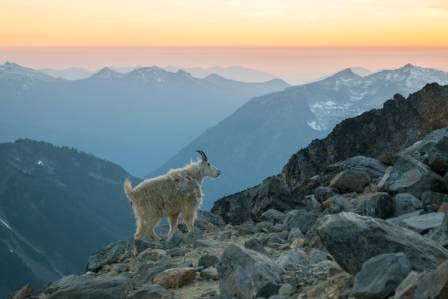
The mountain goat embodies the harmony between form and function—built for extreme terrain, with adaptations that allow it to thrive where few other mammals can. From its evolutionary roots to its cliff-dwelling lifestyle and specialized diet, the mountain goat remains a testament to nature’s ingenuity in the world’s most challenging environments.