The Basics of Pottery Clay
Clays and non-plastic soils are produced from the breakdown of rocks, resulting in extremely fine particles. Most clay contains a mixture of various clay minerals, along with differing amounts of metal oxides and organic matter. These differences are what distinguish the types of pottery clay. Below, we explore the characteristics of clay and the main varieties used in ceramics.
Published May 3, 2026
Updated May 3, 2026
By Olivia Clark
Clays and non-plastic soils are produced from the breakdown of rocks, resulting in extremely fine particles. Most clay contains a mixture of various clay minerals, along with differing amounts of metal oxides and organic matter. These differences are what distinguish the types of pottery clay. Below, we explore the characteristics of clay and the main varieties used in ceramics.
1. Plasticity of Clay
Clay stands apart from non-plastic earth and fine sand because of its ability to form a cohesive, moldable mass when moistened properly. This property, called plasticity, allows the clay to hold its shape during shaping or sculpting. When fired at high temperatures, clay partially vitrifies, transforming into a hard, dense, rock-like material known as ceramic.
2. Categories of Clay
Clays are classified according to their properties and the firing temperature needed to reach maturity—the point at which they achieve maximum hardness and durability. The three most widely used clay types are:
Earthenware clay
Mid-fire stoneware clay
High-fire stoneware clay
These clay bodies are often sold in ready-to-use moist form, but potters can also create custom clay bodies by mixing dry clays and additives with water to achieve specific characteristics.
3. Earthenware Clay
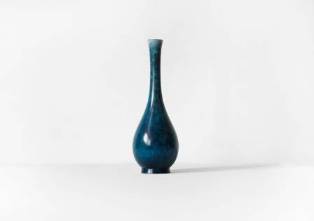
Earthenware is one of the oldest and most common clay types. It is highly plastic and easily shaped, though sometimes sticky. Earthenware contains iron and other minerals that allow it to mature at relatively low temperatures, typically between 950°C and 1100°C (1745–2012°F).
The natural color of moist earthenware ranges from red, orange, yellow, to light gray. Once fired, colors include brown, red, orange, buff, medium gray, and white. The final color depends on mineral content and firing method. Terracotta, meaning “baked earth,” is a popular form of earthenware.
4. Stoneware Clay
Stoneware clays are also plastic and usually gray when moist. When fired, their colors range from light gray and buff to medium gray and brown, influenced by the firing process.
Mid-fire stoneware matures between 1160°C and 1225°C (2150–2260°F).
High-fire stoneware matures between 1200°C and 1300°C (2200–2336°F).
Stoneware is known for its strength and durability.
5. Ball Clay
Ball clay is a very fine-textured, highly plastic clay with few impurities. It matures around 1300°C (2336°F).
Because of its high shrinkage during drying and firing, ball clay is rarely used alone. It is most effective when blended with other clays to enhance plasticity and workability in a clay body.
6. Fire Clay
Fire clay is prized for its high firing temperature, often around 1500°C (2696°F). It is relatively free of impurities but may contain iron spots that create a speckled texture when fired.
Fire clay is used to increase the maturation temperature in stoneware bodies, add texture or “tooth,” line kilns, support ceramic pieces, and seal kiln doors.
7. Kaolin (Porcelain) Clay
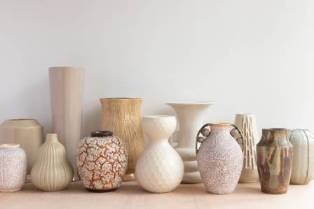
Kaolin, or porcelain clay, is extremely pure and very light in color. Moist kaolin is typically light gray, while fired clay ranges from near-white to white.
Kaolin is less plastic than other clays, making it harder to shape. It fires at very high temperatures, around 1800°C (3272°F). To improve workability and lower firing temperature, it is often mixed with ball clay. Most porcelain bodies combine kaolin with ball clay for a balance of plasticity and strength.