Parasailing: Soaring Above the Sea for an Unforgettable Adventure
Whether you're a thrill-seeker or someone simply drawn to the serenity of open skies, parasailing is a captivating way to experience the outdoors from a new perspective. Floating high above the sea, tethered to a canopy, you'll witness scenic coastlines and feel a rush like no other. Before you lift off, here's everything you need to know to prepare for your flight.
Published May 8, 2026
Updated May 8, 2026
By Nathaniel Burke
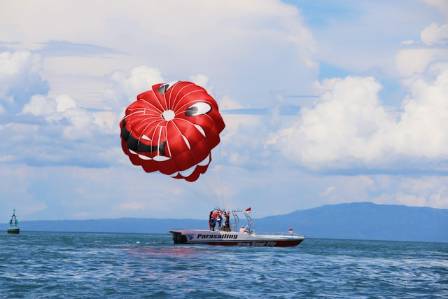
Whether you're a thrill-seeker or someone simply drawn to the serenity of open skies, parasailing is a captivating way to experience the outdoors from a new perspective. Floating high above the sea, tethered to a canopy, you'll witness scenic coastlines and feel a rush like no other. Before you lift off, here's everything you need to know to prepare for your flight.
What Exactly Is Parasailing?
Parasailing, sometimes referred to as parascending or parakiting, is a recreational activity where individuals are harnessed to a canopy similar to a parachute and towed behind a moving boat. As the vessel gains speed, the rider is lifted into the air, gliding effortlessly while suspended high above the water.
How the Experience Works
During a typical parasailing session, you're securely fastened into a harness that connects to the parasail. As the boat moves forward, the canopy fills with air and lifts you skyward. Most rides offer you the chance to take in sweeping panoramic views while feeling as though you're floating. Your flight is closely monitored by trained personnel on the boat. They oversee takeoff, mid-air safety, and landing, ensuring everything runs smoothly. Communication with the crew is typically done through hand gestures or, in some setups, via radio.
Reasons to Try Parasailing
People are drawn to parasailing for many reasons. For some, it’s the thrill of ascending high above the sea, while others appreciate the calmness of flying in silence above the waves. It also presents a mental and physical challenge for those wanting to try something new, and it's a great bonding activity for friends, families, or couples.
Types of Parasailing Flights
Several styles of parasailing are offered, catering to different group sizes and preferences:
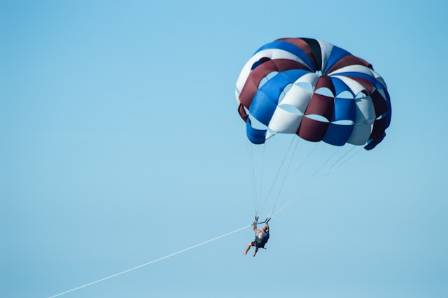
Single Rider Flights: For those who wish to soar solo and enjoy some peaceful airborne solitude.
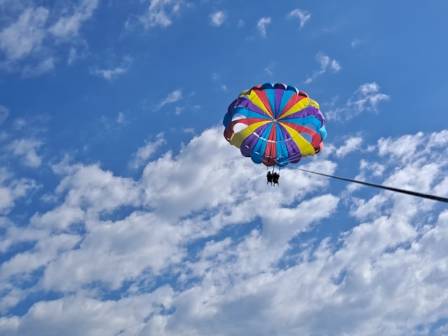
Tandem Flights: Two participants fly together, often a popular choice for couples or friends.
Triple Flights: A group of three can share the experience, ideal for family outings or small groups.
Winch-Boat Launching: The ascent and descent are controlled using a motorized winch system, allowing for smooth lift-offs and landings from the deck of the boat.
Trick Parasailing (Wake-Parasailing): For advanced riders, combining acrobatics with airborne movement, offering a more athletic challenge.
Group Participation Limits
The number of people who can participate at once is influenced by the parasail's design, the towing boat's size, and weather conditions. While many setups accommodate single, double, or triple rides, large boats in calm weather might manage a group rotation efficiently.
How to Learn Parasailing
Beginners can try parasailing without extensive training. Most operators provide a short briefing that includes safety guidelines, equipment usage, and hand signal communication. Some companies may conduct a quick water-competency check or basic fitness assessment, but no prior experience is required.
Ideal Conditions for Parasailing
The perfect time to enjoy parasailing usually aligns with mild weather and light winds. Mornings or late afternoons are often preferred, offering calmer seas and better visibility. Depending on your location, parasailing is best enjoyed during the dry or warm seasons when the skies are clearer and the winds are more predictable.
Who Can Participate in Parasailing?
Most healthy individuals can take part in parasailing. It’s generally suitable for people without serious heart, respiratory, or musculoskeletal conditions. Pregnant individuals and those recovering from surgery are advised not to participate. If unsure, consult a physician before booking a flight.
Medical Considerations Before You Fly
Before parasailing, it’s important to assess any personal health conditions. While the activity is generally safe, individuals with back issues, chronic illnesses, or those recovering from surgery should seek medical advice. Each parasailing operator may also have specific age, weight, and health-related restrictions.
Is Parasailing a Risky Activity?
When conducted under proper supervision and with standard safety practices, parasailing is considered a low-risk recreational activity. All flights are overseen by trained staff who prioritize weather conditions, equipment checks, and rider readiness. As with any outdoor sport, risks can exist, but responsible operations and adherence to guidelines significantly reduce them.
How Does Parasailing Compare to Paragliding?
Although they may seem similar, parasailing and paragliding are quite different:
Parasailing involves being towed by a boat and is typically a leisure activity requiring no prior training.
Paragliding, on the other hand, is an independent aerial sport launched from hills or mountains, requiring skill, knowledge of wind dynamics, and often, formal instruction.
Take Flight—Where Sky and Sea Meet
Whether you're captivated by coastal beauty or seeking a fresh perspective from above, parasailing blends calm with thrill in an unforgettable way. As you rise above the shoreline and feel the ocean breeze against your face, you'll understand why this experience is treasured by adventurers worldwide.