9 Must-Know Facts About Hedgehogs
Hedgehogs, belonging to the subfamily Erinaceinae, comprise 15 species of Old World insectivores characterized by their distinctive coat of thousands of short, smooth quills. Most species weigh less than 700 grams, though the common West European hedgehog (Erinaceus europaeus) can reach 1,100 grams.
Published May 5, 2026
Updated May 5, 2026
By Michael Jones
General Characteristics
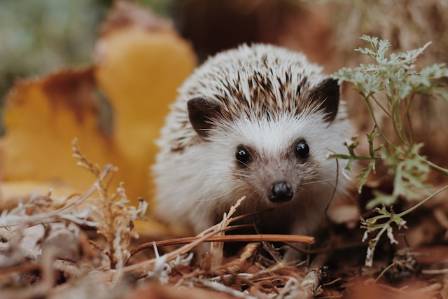
Hedgehogs, belonging to the subfamily Erinaceinae, comprise 15 species of Old World insectivores characterized by their distinctive coat of thousands of short, smooth quills. Most species weigh less than 700 grams, though the common West European hedgehog (Erinaceus europaeus) can reach 1,100 grams. Their bodies measure 14-30 cm long, complemented by a short, thinly-furred tail of 1-6 cm. This group includes three Eurasian species (genus Erinaceus), four African varieties (genus Atelerix), six desert-dwelling types (genus Hemiechinus), and two steppe species (genus Mesechinus). While European hedgehogs are sometimes kept as pets, the African pygmy hedgehog (Atelerix albiventris) has gained particular popularity in captivity.
Physical Description
All hedgehog species share a similar body structure, though certain desert varieties have evolved longer limbs and more prominent ears. Their compact, stout bodies are covered in dense spines except on the underside, limbs, face, and ears. These cream-colored quills feature distinctive brown and black banding, with overall coloration varying from speckled cream to deep brown depending on pigment distribution; some specimens display complete melanism. The underparts show sparse, coarse fur ranging from white to black (sometimes mottled), while facial markings may appear white, brownish, or mask-like. Their slender, short limbs support large feet equipped with long, curved claws (with Atelerix species showing reduced or absent first toes). Despite their prominent eyes, visual acuity is limited, compensated by excellent auditory and olfactory capabilities. Their conspicuous ears and slender, flexible snout tipped with a moist, bare nose enhance these senses.
Defense Mechanisms
When threatened, hedgehogs typically crouch, hiss, and raise their spines, but their most effective protection comes from curling into a tight, impenetrable ball. This rolling maneuver is enabled by a specialized muscle running from neck to rump beneath the skin, which acts like a drawstring to pull the head, body, and limbs inward. As the animal curls up, the normally angled spines become erect, transforming the creature into a formidable sphere of sharp projections that safeguards its vulnerable head, appendages, and soft underside. While this defense proves effective against most mammalian predators, certain raptors including hawks, eagles, and owls can still penetrate this protection with their scaled legs and powerful talons.
Locomotion and Activity Patterns
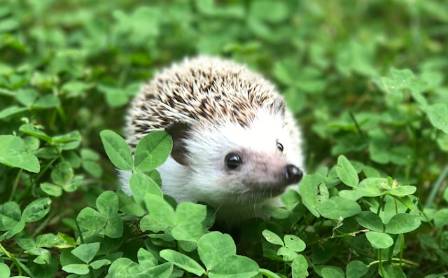
Hedgehogs typically move with either a slow, waddling gait or quick, short steps depending on species, frequently pausing to sniff their surroundings. They can achieve brief bursts of speed, running high on their hairless footpads. Primarily nocturnal, they may occasionally venture out during daylight hours after light rain. Though principally ground-dwelling, some species demonstrate climbing and swimming abilities. Daily shelters include vegetation cover, rock crevices, underground burrows (either self-excavated or appropriated from hares and foxes), and beneath rocky overhangs.
Hibernation and Nesting
Several species, including the West European hedgehog, undergo winter hibernation after accumulating substantial fat reserves beneath their skin and around internal organs. During hibernation at temperatures around 4°C (39°F), metabolic rates drop dramatically - heartbeats slow from 190 to 20 per minute, and respiration decreases to about 10 breaths per minute. Species inhabiting extremely hot or seasonal environments may experience shorter torpor periods. They construct substantial nests from dried vegetation in burrow chambers or beneath ground cover.
Diet and Feeding Behavior
The hedgehog's diverse diet encompasses insects, various arthropods (including poisonous spiders and scorpions), mollusks, amphibians, reptiles (both venomous and non-venomous snakes), bird eggs and nestlings, and fallen fruit. Using their keen sense of smell, they locate food while rooting through leaf litter and soil, capturing active prey with their mouths. Distinctive snuffling and snorting sounds accompany their foraging, and they manipulate food exclusively with their jaws, producing characteristic chewing noises. A peculiar behavior known as "self-anointing" sees them licking or chewing unfamiliar substances to generate frothy saliva, which they then meticulously spread over their spines and body - though the purpose of this ritual remains unknown.
Reproduction and Life Cycle
Solitary by nature, hedgehogs only tolerate company during mating and until their offspring become independent at 4-7 weeks. Females produce 1-3 litters annually, with litter sizes ranging from 1-11 young after a 31-42 day gestation period. Newborns are blind and vulnerable, born with soft white spines that harden and darken within 3-5 days. West European hedgehogs develop the ability to curl into a defensive ball by 11 days old. Notably, females may consume their young if disturbed shortly after birth, and males will prey upon juveniles of their species. Maximum lifespan reaches approximately seven years.
Habitat and Distribution
Hedgehogs inhabit vast territories across Eurasia (south of tundra and taiga regions, excluding Japan and the Tibetan Plateau), extending into Asia Minor, the Arabian Peninsula, most of Africa (avoiding dense rainforest), and parts of India. The West European hedgehog frequents forest edges, grasslands, scrubland, hedgerows, and suburban gardens, and has been introduced to New Zealand. Remarkably, the desert hedgehog (Hemiechinus aethiopicus) thrives in the extreme aridity of the Sahara and Arabian deserts, concentrating around oases and vegetated dry riverbeds.

Taxonomic Classification
Hedgehogs form the subfamily Erinaceinae within the family Erinaceidae, which also includes Southeast Asian moonrats and gymnures (subfamily Galericinae). The term "hedgehog" sometimes broadly references all family members. Their closest relatives are gymnures, and together they constitute the Erinaceidae family - the sole surviving family in the order Erinaceomorpha. The evolutionary connections between this family and other mammalian groups like shrews, solenodons, moles, golden moles, and tenrecs remain scientifically unresolved.